
Check out the training calendar to find out!
https://adamajobcenter.crs.org/training-event/how-to-utilize-duolingo/
Have a good month everyone!
UNHCR, the UN Refugee Agency, is deeply saddened by the recent tragic loss of life in the Aegean Sea. Most recently, at least 12 people, all women and children, have perished in two separate incidents off Samos island this week.
On 25 November, 39 people were rescued and eight people – six children and two women, all from Afghanistan – lost their lives at the sea northeast of Samos amidst adverse weather conditions. Amongst the victims were babies, the youngest just four months-old. A mother lost three of her children while another man lost both his wife and daughter.
On the morning of 28 November, a new incident resulted in the death of at least four people, two women and two children. A total of 28 people have been located. The circumstances surrounding this incident are yet to be determined.
UNHCR teams have been on the ground, supporting survivors from both incidents and assisting authorities in the heartbreaking aftermath. For survivors and their families, this includes the long and painful process of establishing family links, identifying bodies, arranging burials, coping with immense grief and trauma while navigating the reception and asylum procedures.
“Our thoughts are with all the survivors who are enduring unimaginable psychological distress. We stand ready to offer any additional support they may need.” said Maria Clara Martin, UNHCR Representative in Greece.
“These repeated tragedies highlight the urgent need for long-term responses and safer and credible alternatives for those fleeing conflict, persecution, violence, or gross human rights violations. We need serious efforts towards peacebuilding, conflict resolution and addressing root causes of flight; more aid to countries along the displacement routes; and of course, cooperation among states to achieve all the above. Counting lives lost at sea cannot become a norm – we should not get used to it”, she added.
The recent shipwrecks follow four other fatal incidents in the Aegean Sea: on 6 November, four lives were lost off southern Rhodes; on 10 November, a child was reported missing off Samos; on 23 November, a woman was reported missing near Farmakonissi; on 25 November, the body of a man was found on an inaccessible shoreline on Lesvos.
In total, this November, at least 17 people have died in the Aegean in their attempt to reach Greece and 45 since the beginning of the year.
UNHCR notes with concern the increase in fatalities in the Aegean Sea. For many, boarding unseaworthy vessels appears to be the only option to escape conflict or persecution. These journeys come with immense risks, including injury, exploitation by smugglers and loss of life. Additionally, we are concerned that some deterrence actions may involve risky practices and pursuits that may further endanger lives. .
The tragic loss of life in the Aegean must serve as a call to action to prevent further tragedies and uphold our shared commitment to protecting those fleeing conflict, persecution, violence, and human rights violations.
The European project “Together in Sport -Phase II” is implemented by METAdrasi
in cooperation with the Hellenic Olympic Committee and the German Olympic Sports
Confederation and offers sports and cultural activities in various locations of Attica. The aim
of the project is to use sport and culture as social institutions, through the organization of
sport and cultural activities, in which refugee children will participate together with their
peers from the local communities.
The project is provided free of charge and is addressed to children aged 7-17 and young
adults aged 18-21. (more…)
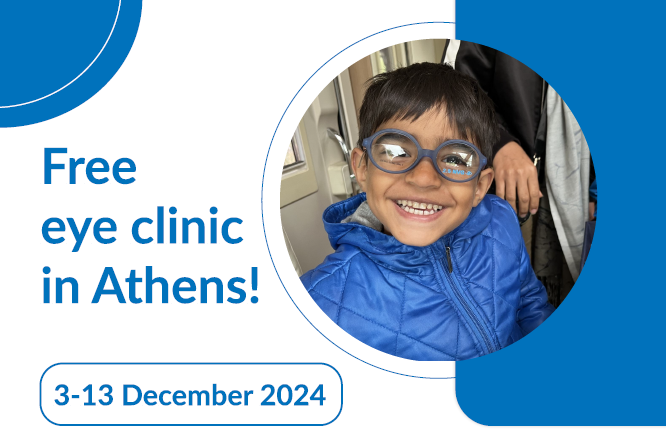
Light Without Borders and OneSight Essilor Luxxotica Foundation, in cooperation with UNHCR, Bairamoglou and MSF, will conduct a free eye in Athens for all those in need, regardless of legal status (refugees, asylum-seekers, migrants etc.) and age. The clinic will include visual screening to determine the need of each patient: prescription glasses will be provided for free to those needing them based on the screening.
Please check the posters for more information in booking appointments!
Every 10 minutes, a woman is killed by a partner or a family member. Violence against women is the most pervasive breach of human rights worldwide, affecting almost one in three women. The most extreme manifestation of this violence – femicide – claimed the lives of at least 51,100 women in 2023. These numbers reveal that the systems and structures meant to protect women and girls are failing.
Women fleeing conflict, war, persecution or human rights violations are even more vulnerable to gender-based violence. Today, over 60 million forcibly displaced and stateless women and girls are at particular risk of gender-based violence during displacement. They face a 20% higher risk of intimate partner violence, while conflict-related sexual violence was reported to have surged by 50% in 2023 alone. Displacement can also increase tension within families, multiply triggers of abuse and confine women and girls to shelters with their abusers.
This year’s 16 Days of Activism campaign, under the theme “Every 10 Minutes, a woman is killed. #NoExcuse. UNiTE to End Violence against Women”, will be launched on 25 November, the International Day for the Elimination of Violence Against Women, and will run until 10 December, International Human Rights Day. The campaign calls for urgent action, an end to impunity and funding to address the root causes of violence and support women’s rights movements, including those led by refugee women.
In Greece, UNHCR is joining forces with national authorities, municipalities, civil society, partners, refugees and asylum-seekers, with a view to prevent, mitigate and respond to gender-based violence, to advocate for actions and solutions and raise awareness through events and discussions.
The colour orange remains a key UN symbol for unifying global activities and drawing attention to the campaign’s message. It represents hope for a brighter future, free from violence against women and girls.
Programme of public events in Greece:
In addition to the above events, UNHCR, in cooperation with local authorities, partners and refugee-led organizations, will run across the country a series of participatory awareness sessions, screenings, art workshops and focus group discussions with refugees and asylum-seekers in reception centres and urban areas across the country. All events are free to all.
“The family is the natural and fundamental group unit of society and is entitled to protection by society and the State.”
Article 16, paragraph 3, The Universal Declaration of Human Rights.
UNHCR, the UN Refugee Agency is pleased to announce ahead of World Children’s Day the 28th Annual National Student Contest in Greece for the 2024-2025 school year. This year’s theme, “Family Means Together”, aligns with UNHCR’s global “Hope Away from Home” campaign.
Today, almost 123 million people around the world have been forced to flee their homes due to escalating conflicts, violence and human rights violations. Many are violently separated from their families. They may spend years without seeing each other, or even never reunite.
Family separation affects the mental health of refugees, complicating their efforts to adapt and integrate into the host society. In addition, in the absence of safe alternatives, it may push family members who stayed behind to risk their lives by following dangerous routes to reunite with their loved one. States have a responsibility to protect and restore the family life of refugees, including through family reunification processes.
UNHCR, together with its partners, helps to ensure the fundamental right to family unity, supports separated refugee families and strengthens their access to reunification processes.
The UNHCR Student Contest invites primary and secondary school students, across Greece, to reflect on what family means to them. Through sketches, posters or postcards, students can express their ideas on family unity and address messages to separated refugee families or decision-makers. Where do people find comfort in their hardest times? How could children’s fundamental need for belonging be better protected? How would it feel to be forced to leave your homeland and family behind? What changes would students ask to those who have the power to bring families together? What message would they like to share with separated refugee families who wait for years to reunite with their loved ones?
Students may work individually or in groups and submit their entries by 28 February 2025, through this webpage: https://www.unhcr.org/gr/student-contest-2024.
Α special committee will review all entries based on their originality and creativity and will award two entries per school level (Kindergarten, Primary school, Junior High School, High School). The committee consists of representatives from the Greek Council for Refugees, the Hellenic Theatre/Drama and Education Network, the Network for Children’s Rights, UNRIC – the UN Regional Information Centre (Office for Greece), Athens Comics Library and UNHCR. In addition, Popi Kyrdi, teacher and head of the Cultural Programmes at the Primary Education Directorate of A’ Athens and Naemi Solomon, a young refugee whose family was reunited in Greece after a long struggle, will take part in the evaluation process.
Awarded students will receive commemorative gifts from UNHCR, including canvas bags and T-shirts from the exclusive collection resulting from UNHCR’s global “Youth with Refugees” art contest with the theme “Hope Away From Home”. All participants will also receive digital commemorative diplomas for their participation in the Contest.
For detailed information about the rules and conditions of participation in the Contest, please visit: www.unhcr.org/gr/student-contest-2024.
A few words about UNHCR’s Hope Away From Home Campaign
“Hope Away from Home” is a global UNHCR campaign calling for renewed solidarity and firm commitments from states to uphold the rights of people seeking safety from war, violence and persecution. Granting access to asylum, family reunification, access to employment and education are all ways states can show people fleeing war, violence, and persecution that there is hope away from home.
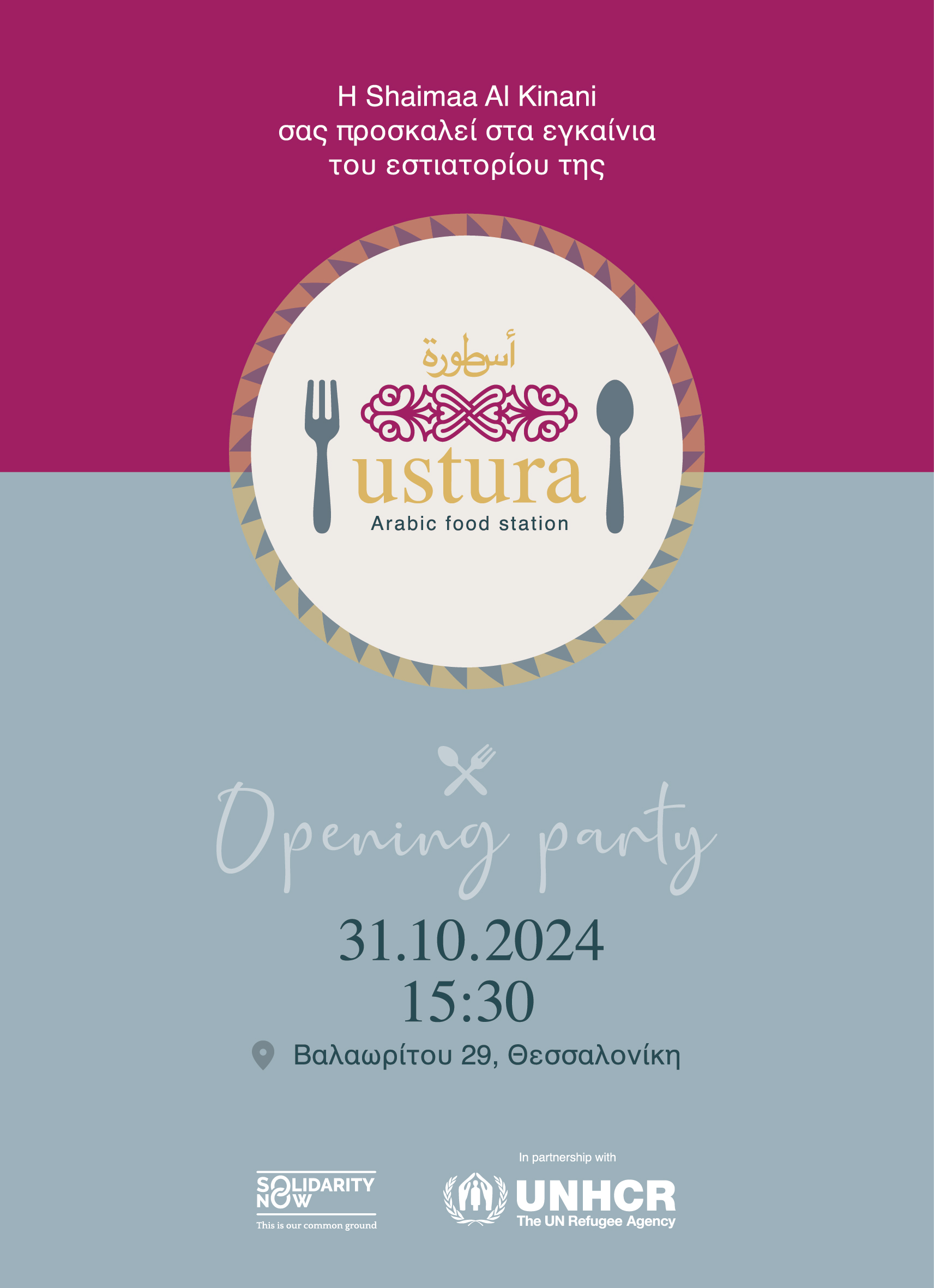
“Ustura”, which means “myth” in Arabic, is the name of the restaurant that Shaimaa Al Kinani is opening, and she is celebrating with an opening party on October 31st at 15:30, 29 Valaoritou Street, in the center of Thessaloniki.
After four years in Greece, Shaimaa’s love for cooking and her need to create her own space led her to seek support from the Employability Service of the Blue Refugee Centre (BRC) of SolidarityNow in Thessaloniki.
There, through the BRC Livelihoods programme, implemented in collaboration with UNHCR, the UN Refugee Agency, the employability counselors stood by Shaimaa’s side, step by step, helping her turn her dream into reality.
From obtaining the necessary permits and documents, to communicating with the relevant authorities, offering advice on entrepreneurship in Greece, and providing daily emotional support to a woman striving for autonomy through her work, the Employment Service counselors were Shaimaa’s allies.
Therefore, together, Shaimaa and the partners from SolidarityNow and UNHCR invite the residents of Thessaloniki to a celebration for the opening of her restaurant, which is also an invitation to a celebration of cultures, acceptance, and recognition!
We look forward to seeing you!
Αbout SolidarityNow
SolidarityNow is a non-governmental organization established in 2013 to respond to the needs and ensure the rights of the most vulnerable social groups. The organization’s vision is to improve people’s lives and empower them to fight for a more justice and inclusive society. From 2013 until today, SolidarityNow has supported through its actions and programs (housing, psychosocial support, legal assistance, interpretation, education, child protection) more than 350,000 of our vulnerable fellow human beings to claim a life with dignity and prospects.
About UNHCR
UNHCR is a global organization dedicated to saving lives, protecting rights, and building a better future for people forced to flee their homes because of conflict and persecution. We are present in Greece since 1952, trying to ensure the protection and integration of refugees and asylum-seekers in the country. UNHCR has developed initiatives and tools to link refugees in Greece with the labour market, implements vocational training, education and livelihoods programmes. The Office in Greece also focuses on awareness-raising activities and works with the Greek authorities, civil society actors, cities and municipalities, the private sector and the local and refugee communities to promote inclusion policies at local and national level so that refugees can thrive in and contribute to their new home.
“I was afraid of the sea, especially after crossing in a boat to Lesvos. When I arrived here, I learned how to swim, which helps me relieve stress and feel more confident.”
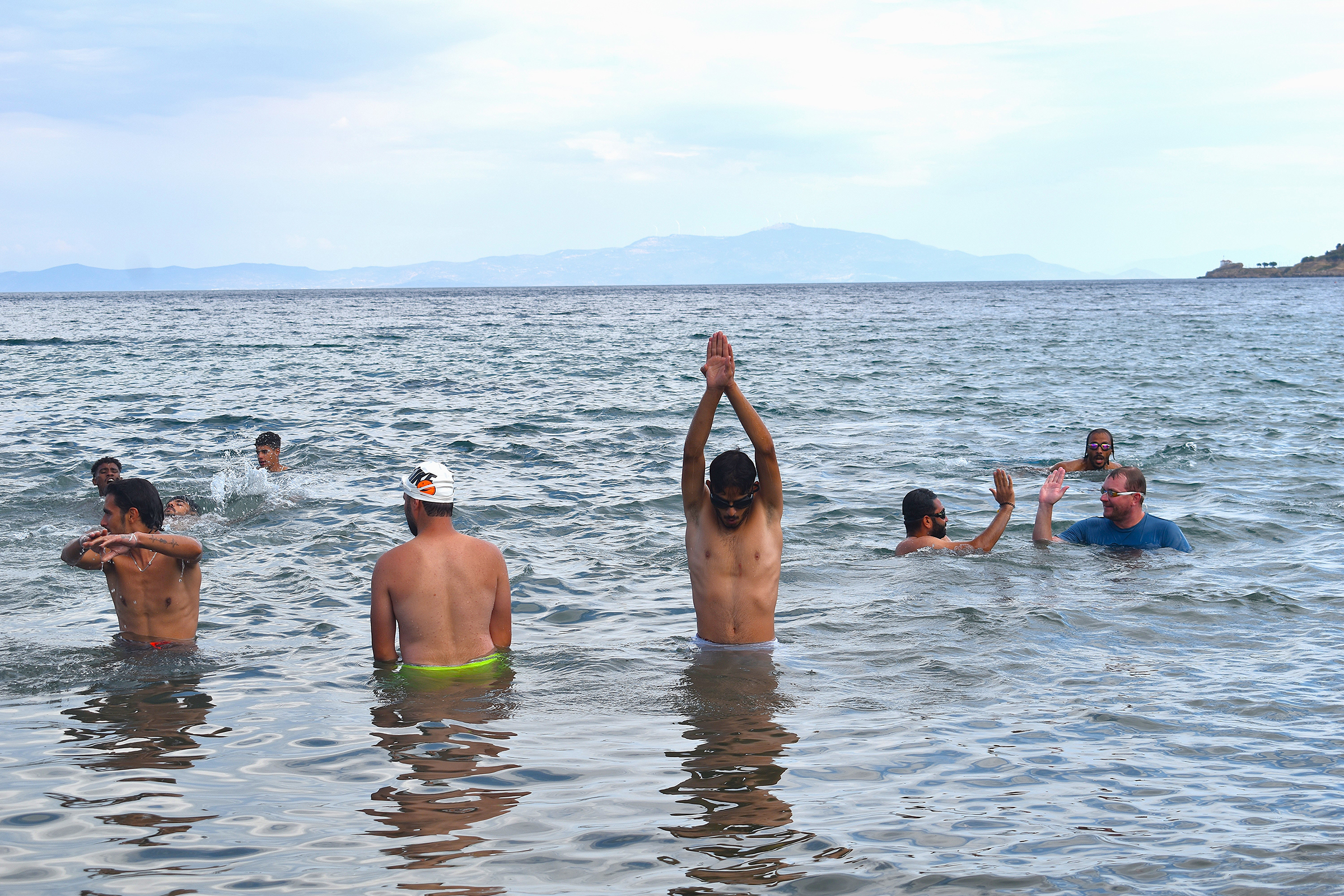
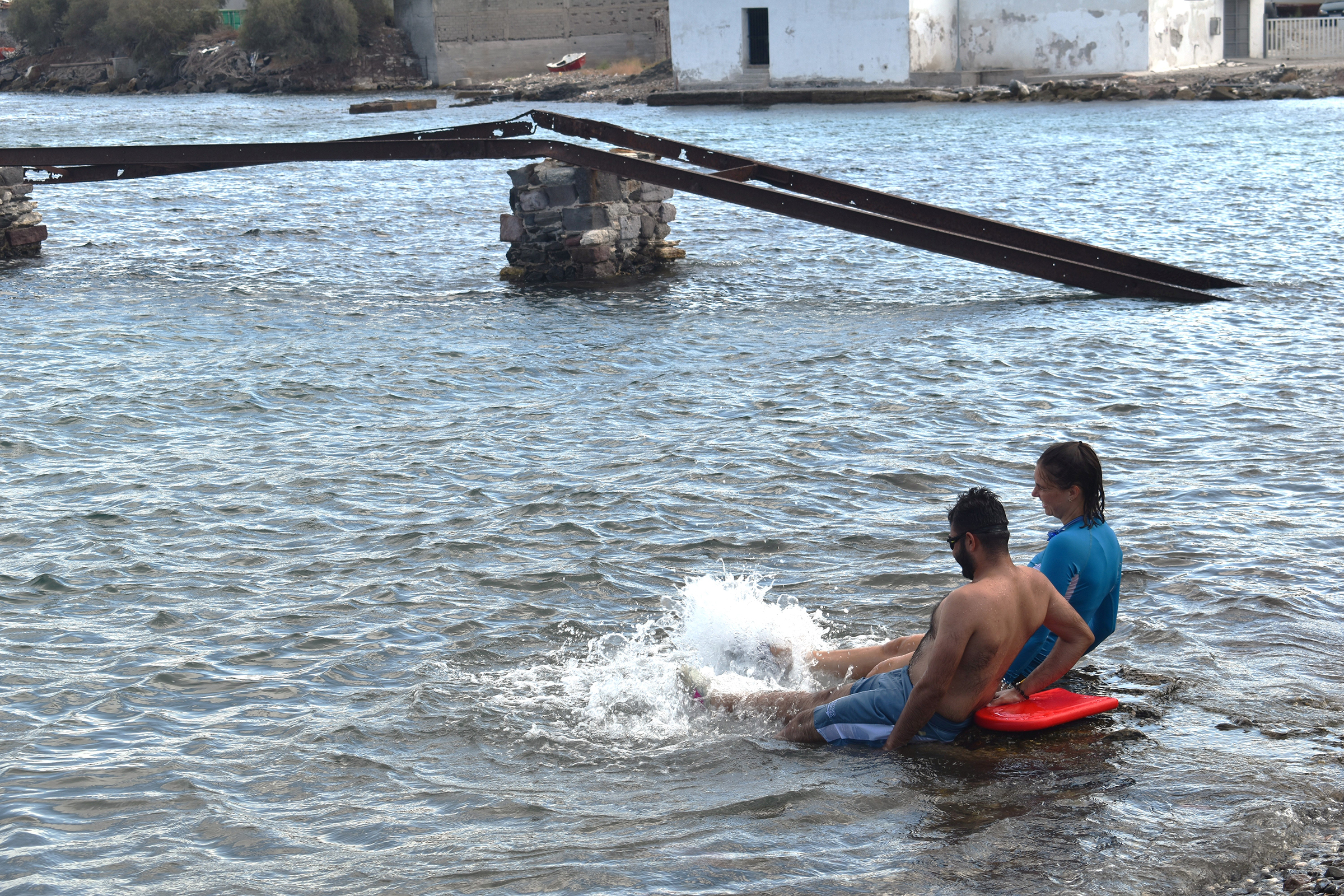
For young Fatime, the swimming classes for refugees, offered by Yoga and Sport with Refugees (YSR), provide much more than just a useful skill. As she explains, they also help her overcome her fears and stress, while offering her a creative way to spend her time on the island, meeting people and making new friends. Since last June, more than 440 people have participated in the swimming lessons organized in Lesvos with the support of the Yusra Mardini Foundation and Butterfly by Yusra Mardini.
The team of dedicated coaches, with the guidance of Sven Spannekrebs, create an environment where people can feel safe in the water, and support them to overcome the trauma they may have suffered from their perilous journey to safety.
Sven, best known through his “character” in Netflix’s movie “The Swimmers”, as he is the swimming coach who helped Yusra Mardini compete in the Olympic Games in Rio, returned to Lesvos this summer. He first participated in the awareness-raising activity “Swim for Good”, organized in June on the island and in six other cities around the world, and then volunteered as a coach in YSR’s swimming classes.
“I feel deeply connected to Lesvos, and I returned not only to teach refugees how to swim and train swimming coaches, but also to send a message of solidarity and hope”, says Sven who is also one of the Board Members of the Yusra Mardini Foundation. The foundation, established by UNHCR Goodwill Ambassador, Yusra Mardini, supports refugees by providing access to sports and education, fostering inclusivity and integration.
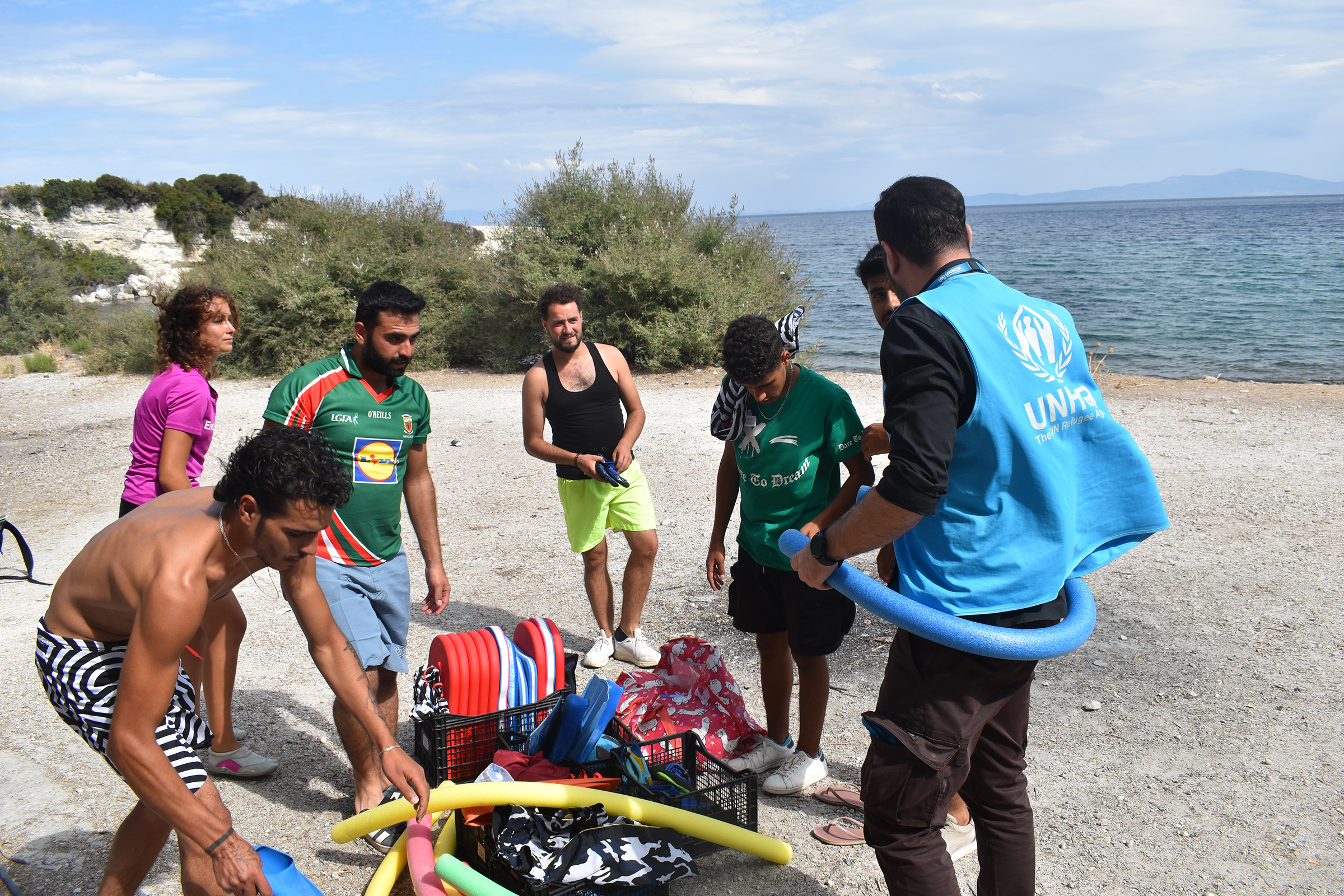
“I take swimming classes because I wish to learn how to love the sea, which has scared me a lot”, Ammar confided to UNHCR staff members, as they delivered a donation of swimming equipment to cover some of the classes’ needs. Another young swimmer, Mohammad, who is a refugee from Palestine, feels like he is closer to home when at sea, since swimming was part of his daily life. “In Gaza, the sea is stormy! The waters here are very calm”, he added before eagerly diving in the sea with his friends.
“We aim to include local people in the classes soon, in order to create new opportunities for integration through sports”, Sven Spannekrebs adds, while watching class participants having fun and growing more confident in the water.
You can find more information about YSR’s full schedule of activities and information for next year’s swimming classes here:
https://yogasportwithrefugees.org/
Canvassed Encounters – Encounters on Canvas is the title of the exhibition hosted at the Herakleidon Museum in Athens from 1 August to 15 October 2024 on the subject of weaving and clothing at all stages of their functional chain. Drawing on the entire chaîne opératoire of textiles (manufacture, use, recycling) and on the wide scope of textile consumption, ranging from indispensable everyday items to artistic masterpieces, from low to high culture, the fabrication of “culture” or “civilisation” as a heterogeneous admixture of diverse and anything but authentic elements lies at the heart of this exhibition.
Seen through the uninformed gaze of Alissa, an unaccompanied refugee child who travels across Europe just as European explorers once roamed the rest of the world, awkward comparisons appear, rather than established or even scientific ways of acting and thinking.
What does she know and how does she see through:
Curated by: Dimitra Douskou, Iris Tzahili, with the contribution of Sophia Vakirtzi and Vaya Papazikou
Original works by: Polyxeni Angelidou, Lida Anastasiadou, Angela Castresana, Sophie Desrosiers, Sara Ettlinger, Marie-Helène Galton, Christian Grelier, Marina Kassianidou, Yannis Rogdakis, Iris Tzahili.
The exhibition serves under the auspices of the Ministry of Culture and UNHCR, the UN Refugee Agency, Representation in Greece.
See also: The Herakleidon Museum celebrates the European Heritage Days
As I sat amidst the vibrant atmosphere of the Ancient Theatre of Epidaurus, watching Aeschylus’ The Suppliants, I was struck by the timelessness of its themes. This poetic and deeply political play, written over 2,500 years ago, resonates with issues that are very relevant today: the right to asylum, the vulnerability and resilience of women fleeing persecution, and the broader question of women’s place in society. The play, masterfully directed by Marianna Calbari, was brought to life by an outstanding cast and the awe-inspiring voices of the Chorus, along with the captivating vocals of Marina Satti. It was a profoundly moving experience, offering not only a reflection on the past but also a powerful lens through which to examine the struggles of the present.
The Suppliants tells the story of fifty daughters of Danaus, who flee from Egypt to Argos, seeking asylum from forced marriages to their cousins. They throw themselves at the mercy of King Pelasgus, appealing to his sense of justice and the sacred laws of hospitality. Their plea is not just a request for protection; it is a demand for their fundamental human rights. This echoes the experiences of countless women today who are forced to flee their homes to escape gender-based violence, persecution, and oppression.
Asylum is a concept deeply rooted in the moral and legal traditions of many societies. It is a recognition that some individuals, due to the extreme threats they face, must be granted safety beyond their own borders. However, in today’s world, the right to asylum is under increasing strain. As we grapple with the complexities of forced displacement across the globe, the response from many countries, including those with democratic traditions, has been mixed at best. This is particularly true for women, who often face additional layers of vulnerability. They are at risk not only from the circumstances they flee but also from exploitation and abuse during their journey and even after reaching a supposed safe haven.
In The Suppliants, the women are not passive victims. They assert their right to control their own destinies and resist the imposition of power over their bodies and lives. This assertion is as crucial now as it was in ancient Greece. Today, women who seek asylum are not just escaping immediate physical threats; they are also fleeing from societies that deny them autonomy, equality, and dignity. The struggle of the Danaids is thus emblematic of a larger fight for women’s rights—one that continues in many parts of the world.
Moreover, the play raises important questions about the responsibilities of those who receive the plea for asylum. King Pelasgus is caught in a dilemma: should he honour the ancient customs of hospitality and protect the suppliants, or should he bow to the pressure of the Egyptian suitors and avoid conflict? This mirrors the difficult choices faced by states today, particularly in Europe, where the refugee and broader migration issue has sparked intense political debate. Aeschylus does not offer easy answers, but he underscores the moral imperative of compassion and the dangers of turning away those in need.
The voices of the Danaids still resonate in my mind but also echo through the ages, calling us to remember our shared humanity and the responsibilities that come with it. Let us not turn a deaf ear.
*This is a translation of an op-ed hosted in Greek at the newspaper TA NEA on 16 September 2024 on Aeschylus’ tragedy The Suppliants staged in the summer of 2024 by Greek Art Theatre Karolos Koun and Neos Kosmos Theatre under the direction of Marianna Kalbari.
Can refugees become entrepreneurs in Greece? In their quest to rebuild their lives, those seeking safety in Greece often strive for decent employment or endeavour to establish their own businesses, utilizing their skills and talents. However, numerous obstacles stand in their way.
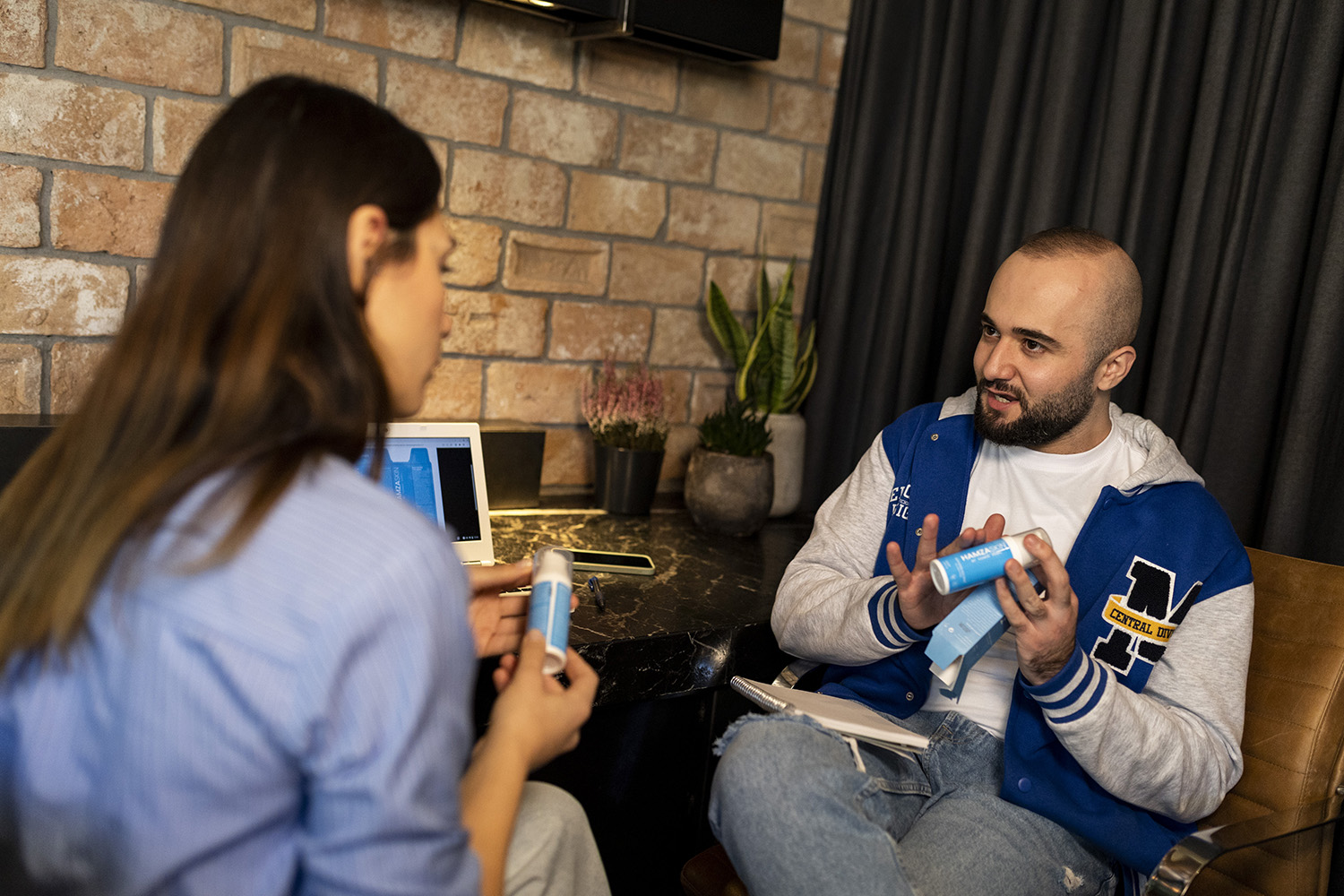
Born and raised in Iraq, Hamza Nabil led a peaceful life until the outbreak of war in 2014. At just 17 years old, he decided to leave Iraq in search of safety. In October 2017, he arrived in Chios, and ten months later, after being granted with refugee status, he settled in Athens. With the support of “Ready4Business” refugee entrepreneurship programme, implemented by METAdrasi in partnership with UNHCR, Hamza successfully laid the foundations of his own business in Greece.
His journey was marked by significant challenges. Arriving alone in a bustling city, Hamza grappled with isolation, without friends or family, and confronted the hurdles of an unfamiliar language. To lift his spirits, he began creating content on social media about beauty topics. Driven by passion and dedication, he attracted a global following, reaching nearly half a million followers.
Convinced that everyone deserves access to self-care, Hamza embarked on a new venture: the creation of his line of natural skincare products.
“All the obstacles and difficulties I faced have shaped me into the person I am today and are reflected in the philosophy of my business. My products cater to individuals who value self-care. They are vegan, free of chemicals and fragrances, and cruelty-free. They embody natural beauty,” explains Hamza.
Starting with a trial batch of facial care products in Iraq, Hamza received overwhelmingly positive feedback. This prompted him to establish his company, “Hamza Skin by Hamza Nabil,” based in Greece, with the aim of reaching customers worldwide.
Bureaucracy, discrimination, language barriers, and lack of information were just a few of the challenges he encountered. When the bank denied the loan he sought, he faced disappointment but remained resolute.
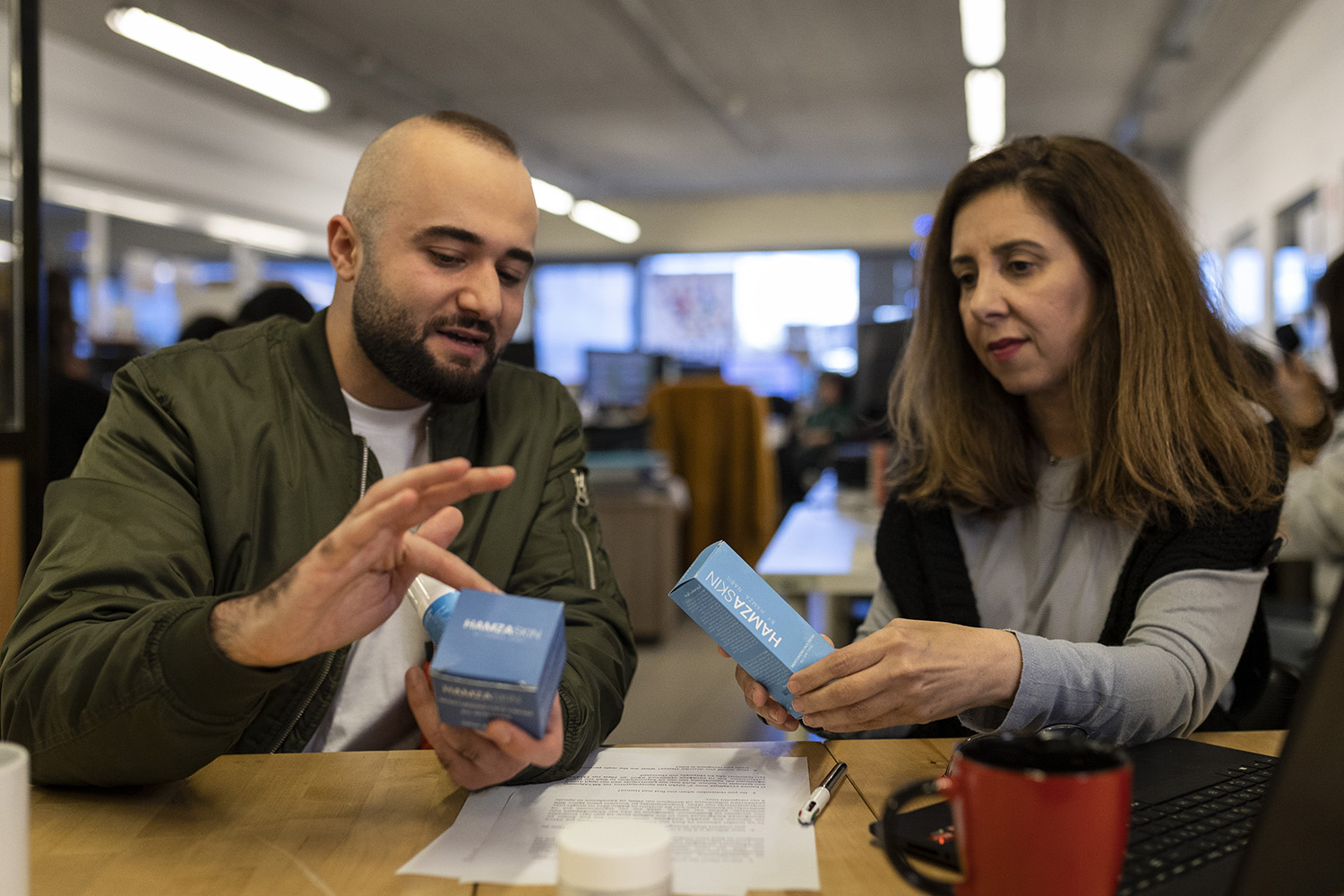
“All young entrepreneurs find it challenging to establish their businesses. However, it is crucial to provide more information about the various documents a refugee may need for services,” Hamza notes, describing the ignorance he encountered when presenting his identity documents.
Without targeted support, refugees encounter significant barriers to employment and face even greater challenges in establishing their own businesses.
“The contribution of the banking sector and private businesses is crucial in supporting refugees to ensure their equal access to financial instruments, expedite the opening of bank accounts, and foster connections between refugees and the Greek business environment,” emphasizes Lora Pappa, President of METAdrasi.
Participating in the “Ready4Business” programme, Hamza developed his business plan, gained insights into the legal and tax framework for businesses in Greece, established essential connections, sought microfinance sources, secured a loan, built his business website and e-shop, and started selling his products globally in December 2023. Hamza already has clients in the Middle East and Europe and has initiated a partnership with a large chain of cosmetic stores in Iraq.
“The access of refugees to the labor market, whether as workers or entrepreneurs, is a crucial pillar in integration and not an act of charity. There are refugees with excellent ideas, knowledge, and experience that can decisively contribute to the development of the Greek economy,” explains Maria Theodoropoulou, responsible for the “Ready4Business” programme.
To date, 30 refugees in Athens and Thessaloniki have participated in the first two cycles of the “Ready4Business” programme, including Hamza. The third cycle, implemented in the first half of 2024, has expanded to include refugees from all over Greece.
Through its initiatives, UNHCR approaches refugee integration from a multidimensional perspective, emphasizing collective efforts as a necessary condition for success.
“Refugees are the architects of their future. With the right support, they can integrate and contribute to the economies and societies of their host countries,” says Maria Clara Martin, UNHCR Representative in Greece.
To this end, UNHCR is developing programmes that support refugees in finding work and overcoming bureaucratic obstacles. It offers vocational training and Greek language courses to improve refugees’ skills and their integration prospects. UNHCR collaborates with central and local authorities to create refugee-friendly policies and initiatives. Additionally, it engages with the private sector, which contributes resources, educational opportunities, and employment prospects, creating a chain of added value for the economy.
Similarly, through his collaboration with professionals in Greece—from the graphic designer who designs packaging to the factory responsible for manufacturing and packaging, and the carriers delivering final products—Hamza contributes to the Greek economy. “All business operations are conducted within Greece and exported globally, making a significant contribution to the local economy,” he stresses.
Hamza describes how his business has facilitated his recovery and integration into Greece. “The business forced me to learn Greek,” he laughs, highlighting his daily interactions with customers, partners, and services in Athens.
Whenever Hamza recounts the challenges he faced in building his business, the confidence and pride he feels become apparent. As he puts it, “The journey from difficulties to success involves years of work. However, I appreciate every moment I have lived. If I had succeeded without experiencing difficulties, I would not have felt the happiness I feel now. This feeling is worth the effort, and this is the message I want to send to those who dream of starting their own business: do not be afraid.”
A few words about UNHCR’s Hope Away From Home Campaign
“Hope Away from Home” is a global UNHCR campaign calling for renewed solidarity and firm commitments from states to uphold the rights of people seeking safety from war, violence and persecution. Granting access to asylum, family reunification, access to employment and education are all ways states can show people fleeing war, violence, and persecution that there is hope away from home. In Greece, UNHCR works with the government, municipalities, civil society, refugee communities and the private sector to promote policies and programmes facilitating refugee integration and their access to employment and livelihoods, so that refugees can thrive in and contribute to their new home.
We use cookies to give you the best online experience. By agreeing you accept the use of cookies in accordance with our cookie policy.
When you visit any web site, it may store or retrieve information on your browser, mostly in the form of cookies. Control your personal Cookie Services here.